[Translate to Englisch:]

The Children are alright!

Den Kindern geht es gut, auch im digitalen Umfeld: Das muss das zeitnahe Ziel der politischen Maßnahmen zur Umsetzung der Handlungsempfehlungen des europäischen Special Panels für die Onlinesicherheit von Kindern sein. Damit ist die Richtschnur des politischen Handelns gesetzt, diese Entscheidungen müssen – so wie es Artikel 3 der UN-Kinderrechtskonvention vorgibt – im besten Interesse der Kinder getroffen werden.

[Translate to Englisch:]

Expert Commission: The digital world must be child-friendly

After 9 months of intensive work, the expert commisison on "Protecting Children and Young People in the Digital World" today presented its recommendations to Federal Minister for Youth Karin Prien. On 4 September 2025, she had appointed eighteen experts from various professions and mandated them to develop a strategy for the protection of young people online, including specific recommendations for action for various stakeholders such as the federal government, the Länder (federal states) and civil society.

[Translate to Englisch:] (c) pixabay via canva.com

Principles for a safe online environment for children

The G7 Digital and Technology Ministers (Germany, France, Italy, Japan, Canada, the United Kingdom of Great Britain and Northern Ireland, and the United States of America) have, for the first time, defined a common set of principles for a safer and more secure digital space for minors. They call on digital service providers to use these principles as a guide for the design of their services and to work with the necessary partners to implement them.

[Translate to Englisch:]

Addressing Children´s Rights at the DNS

From 7 to 12 March, the multistakeholder community will meet in Mumbai, India, for the ICANN 85 Community Forum to discuss current issues and developments related to the security and advancement of the Internet. Among other things, the focus will be on the (continued) work on universal acceptance, the development and implementation of a human rights impact assessment (HRIA) within ICANN structures, and the use of the domain name system. Many bodies will also discuss further preparations for the new generic top-level domain (gTLD) program. An overview of the main topics of the event can be found here.

Age Restrictions on Social Media – What Can We Learn from the Australian Model?

Political intention to introduce age restrictions on social media is intensifying across Europe. Several European Union member states are advancing national initiatives, reflecting growing concerns about the impact of social media on minors. France, Denmark, Greece and Spain are among the countries that have announced or introduced measures to restrict social media use by under-18s. - At the European supranational level, the debate is also gaining momentum. The European Union has set up a panel of child protection experts to advise on possible EU-wide age restrictions, with recommendations expected by the end of the summer.

Lisbon Council High-Level Working Lunch: „To Ban Or Not To Ban”

On Monday Feb. 9th, 2026, ahead of Safer Internet Day the Lisbon Council invited a group of experts to discuss what scientific evidence and practice teach us about children and social media. In the light of the Australian experiment on banning under 16th from a certain selection of social media platforms governments around the globe are rushing to decide whether to follow the same path or find a different approach.

YOUthDIG 2026 – Call for applications!

Young people with an interest in digital issues are sought for YOUthDIG, which will take place in Brussels from May 23 to 27. In preliminary webinars, participants will address practical issues of internet governance and provide input for EuroDIG.

A Strong Committment to Children’s Rights in the Digital Space

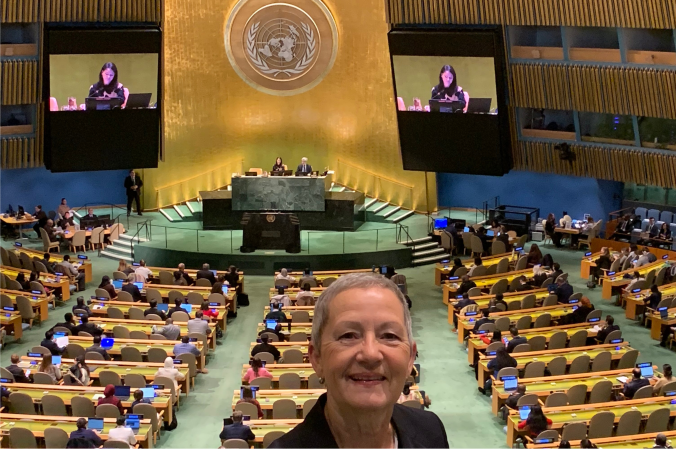
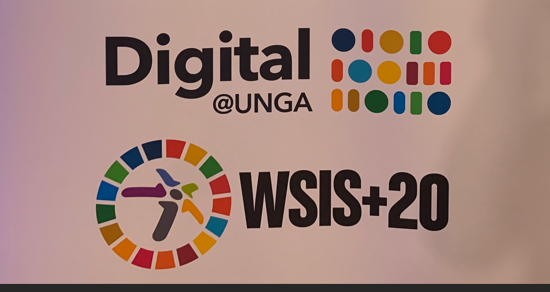
On Wednesday, Dec. 17th, 2025 the United Nations General Assembly have agreed on the Outcome Document of the WSIS +20 Review and established a permanent mandate for the Internet Governance Forum.

It’s time to deliver!

The United Nation‘s General Assembly will convene to deliberate on the World Summit of Information Society Review and the prolongation of the mandate for the Internet Governance Forum. The report refers to the start of the consultations.

[Translate to Englisch:]

Reflecting on Four Years of General Comment No. 25

To mark the fourth anniversary of GC25, the report “The Impact of General Comment No. 25 in the UNCRC Review Process” by the Digital Futures for Children Centre in the Department of Media and Communication, in partnership with the 5Rights Foundation, was released. The report examines how General Comment No. 25 is incorporated into and implemented in current political and legal processes. Further details can be found in our article.

Ansicht: 20. November 2017: Heute ist Internationaler Tag der Kinderrechte

Children should be at least 16 to access social media, say MEPs

On Wednesday, MEPs adopted a non-legislative report by 483 votes in favour, 92 against and with 86 abstentions, expressing deep concern over the physical and mental health risks minors face online and calling for stronger protection against the manipulative strategies that can increase addiction and that are detrimental to children’s ability to concentrate and engage healthily with online content.

Child Rights Impact Assessment: A Policy Tool for a Rights-Respecting Digital Environment

Although children and young people make up about one third of internet users worldwide, their perspectives are still rarely taken into account in technology-related policies, design processes, and decision-making structures. To counter this, the authors Sonia Livingstone and Kruakae Pothong argue that a tool such as the “Child Rights Impact Assessment Tool” can serve as a practical instrument for integrating children’s rights more comprehensively, early on, and systematically into political and administrative decision-making processes.

Show all news