• Topic

    Evolving capacities

    The evolving capacities of the child as an enabling principle that addresses the process of their gradual acquisition of competencies, understanding and agency must be respected.

    That process has particular significance in the digital environment, where children can engage more independently from supervision by parents and caregivers.

    The risks and opportunities associated with children’s engagement in the digital environment change depending on their age and stage of development.

    This must be taken in considerations whenever measures to protect children in, or facilitate their access to, that environment are designed. The design of age-appropriate measures should be informed by the best and most up-to-date research available, from a range of disciplines.


[Translate to Englisch:] Aktuelle Meldungen

Policy brief: Keeping Children Safe Online

The Policy brief, published in December 2025, is based on a comparative analysis of regulatory provisions for online platforms in six different jurisdictions.

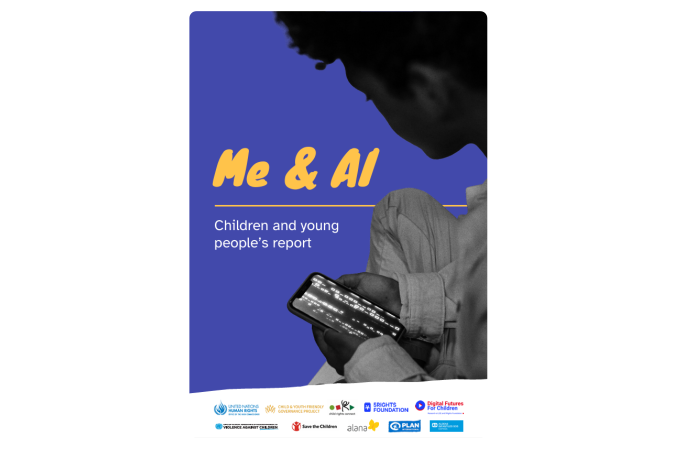
Guidance on AI and Children

The publication, released in December 2025, provides updated guidelines for governments and companies on creating AI policies and systems that protect children's rights.

Report: Children in digital policies

This report investigates how children are represented in digital policies around the

world. The focus is on global patterns and trends, as well as instances of good practice

Ansicht: 20. November 2017: Heute ist Internationaler Tag der Kinderrechte

Children should be at least 16 to access social media, say MEPs

On Wednesday, MEPs adopted a non-legislative report by 483 votes in favour, 92 against and with 86 abstentions, expressing deep concern over the physical and mental health risks minors face online and calling for stronger protection against the manipulative strategies that can increase addiction and that are detrimental to children’s ability to concentrate and engage healthily with online content.

EU Kids Online Study: Tech & Teens

The Interdisciplinary Research Team on Internet and Society (IRTIS) conducted 15 scientifically based studies over a period of six years. The research focused on the effects of digital technologies on the well-being of young people.

Study: EU Kids Online

The Interdisciplinary Research Team on Internet and Society (IRTIS) conducted 15 scientifically based studies over a period of six years. The research focused on the effects of digital technologies on the well-being of young people.

Parents Talk Online Safety: Summary of country reports

Over the last six months, More in Common’s researchers have surveyed almost 10,000 parents with children aged under 18 across the UK, US, Poland, France and the Netherlands to understand how they navigate the challenge of keeping their children safe online. Key findings from across the research and a summary of the country reports can be found here.

[Translate to Englisch:]

Parents Talk Online Safety

‘Parents Talk Online Safety’ is a new More in Common study based on speaking with almost 10,000 parents across the US, UK, France, Poland and the Netherlands. The research finds parents both highly concerned about the online safety of their children and struggling with keeping their kids safe online and deeply frustrated with both politicians and tech company leaders for failure to grip the problem.

Document: Parenting for the Digital Age

The report from September 2025 provides guidance for educators on how to counteract sexual violence against minors in the digital world.

Ansicht: Wir feiern: Kinderrechte gelten auch in der digitalen Welt!

"Children are not content": the responsible use of children's images online

During the summer holidays, families spend time together and create many special memories, whether they're swimming, playing games or eating ice cream. These memories are invaluable to caregivers and relatives alike. However, sharing images of children on social networks can pose risks.