[Translate to Englisch:]

The Children are alright!

Den Kindern geht es gut, auch im digitalen Umfeld: Das muss das zeitnahe Ziel der politischen Maßnahmen zur Umsetzung der Handlungsempfehlungen des europäischen Special Panels für die Onlinesicherheit von Kindern sein. Damit ist die Richtschnur des politischen Handelns gesetzt, diese Entscheidungen müssen – so wie es Artikel 3 der UN-Kinderrechtskonvention vorgibt – im besten Interesse der Kinder getroffen werden.

[Translate to Englisch:]

European Commission: Children’s rights must be taken seriously

The Special Panel on Child Safety Online today presented its recommendations to the President of the European Commission, Ursula von der Leyen. In their report, the experts examine how children and young people grow up in the digital environment, highlighting its advantages and disadvantages, and propose a framework based on the developmental stages of young people. The German expert commission on ‘Protecting Children and Young People in the Digital World’ has already taken a similar approach, having submitted its report to the German government just under three weeks ago.

[Translate to Englisch:] (c) pixabay via canva.com

Principles for a safe online environment for children

The G7 Digital and Technology Ministers (Germany, France, Italy, Japan, Canada, the United Kingdom of Great Britain and Northern Ireland, and the United States of America) have, for the first time, defined a common set of principles for a safer and more secure digital space for minors. They call on digital service providers to use these principles as a guide for the design of their services and to work with the necessary partners to implement them.

[Translate to Englisch:] © Rido via canva.com

Survey of the United Nations on AI Governance

The United Nations is committed to ensuring that children and young people can grow up safely in a digital world, while actively involving young people themselves in this process. Since artificial intelligence is an increasingly important part of this, the UN is now seeking to learn about young people’s experiences.

[Translate to Englisch:]

Age Assurance: From Regulation to Implementation

Representatives from industry and business, regulatory and administrative bodies, and civil society gathered in Manchester (United Kingdom of Great Britain and Northern Ireland) this week, from 14 to 16 April, to exchange information on current developments in the field of age assurance. Following the two previous Global Age Assurance Standards Summits, which focused on the rationale and benefits of standardisation (2024) and the development of effective regulation (2025), this year’s conference centred on the implementation and realisation of age assurance measures.

European Commission: Survey on the Digital Fairness Act

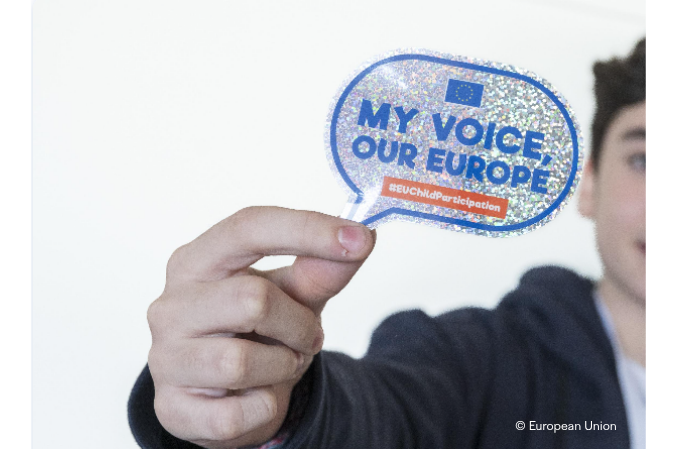
The European Union wants children and teenagers to have safe and positive experiences when using apps, websites, games and social media, so it is creating a new law called the Digital Fairness Act. To help shape this law, the EU wants to hear from children and teenagers aged 12 to 17 about their experiences as consumers, including how apps and websites treat them when they choose, use or pay for things online. Your views will help make the digital world fairer for everyone your age.

[Translate to Englisch:]

Commission holds first meeting of Special Panel on child safety online

Today, European Commission President Ursula von der Leyen hosted the first meeting of the Special Panel on child safety online. The panel, announced in the 2025 State of the Union address, will provide expert recommendations to better protect and empower children online and will explore the need for potential harmonised age restrictions to access social media.

[Translate to Englisch:]

General comment No. 25 5th Anniversary Joint Letter

On the fifth anniversary of the adoption of General Comment No. 25 on children's rights in the digital environment, 53 organisations and signatories remind the States Parties to the Convention on the Rights of the Child to realise children's rights on the internet and in digital services.

European Action Plan against Cyberbullying

On Safer Internet Day 2026, the European Commission presented an action plan against cyberbullying to protect young people online. It is based on three pillars to protecting the mental health of children and young people online. Under this plan, the European Commission is committed to making more targeted use of existing programs and instruments to combat cyberbullying and invites all member states of the European Union to develop national action plans to support the cause jointly and equally, as well as to improve the data and knowledge base on the phenomenon.

(c) IGF 2026

IGF 2026: Call for thematic input

From now until February 28, 2026, 23:59 (UTC), it is possible to submit thematic contributions that are to be given priority consideration at the Internet Governance Forum (IGF) 2026. Organisations and individuals can use a form to select topics that they feel are currently relevant to internet governance.

[Translate to Englisch:]

Call for applications: Microsoft is looking for young people for the AI Futures Youth Council

With the opportunity to get involved in the development of AI products and policies, Microsoft is reaching out to young people between the ages of 13 and 17. The goal is to establish a youth council (AI Futures Youth Council) consisting of 20 members.

Ansicht: 20. November 2017: Heute ist Internationaler Tag der Kinderrechte

Children should be at least 16 to access social media, say MEPs

On Wednesday, MEPs adopted a non-legislative report by 483 votes in favour, 92 against and with 86 abstentions, expressing deep concern over the physical and mental health risks minors face online and calling for stronger protection against the manipulative strategies that can increase addiction and that are detrimental to children’s ability to concentrate and engage healthily with online content.

Show all news