• Topic

    Civil rights and freedoms

    The digital environment provides unique opportunities for children to realize the right to access to information and freedom of expression. The digital environment can enable children to form their social, religious, cultural, ethnic, sexual and political identities and to participate in associated communities and in public spaces for deliberation, cultural exchange, social cohesion and diversity.

    The fulfilment of these rights must be ensured and the right of the child to freedom of thought, conscience and religion in the digital environment must be respected. Privacy is vital to children’s agency, dignity and safety and for the exercise of their rights.

    Children’s personal data are processed to offer educational, health and other benefits to them. Therefore, it must be ensured by legislative, administrative and other measures that children’s privacy is respected and protected by all organizations and in all environments that process their data.

    By use of digital identification systems that enable all newborn children to have their birth registered and officially recognized by the national authorities, access to services, including health, education and welfare shall be facilitated.

Current News

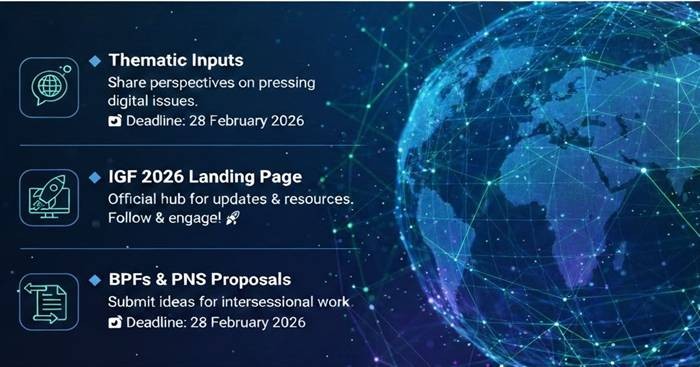
Children's Rights at IGF 2025

Norway is hosting the 20th United Nations Internet Governance Forum(IGF). This will take place from 23 to 27 June in Lillestrom near Oslo.

Child Rights Impact Assessment (CRIA)

Although children and young people make up about one third of internet users worldwide, their perspectives are still rarely taken into account in technology-related policies, design processes, and decision-making structures. To counter this, the authors Sonia Livingstone and Kruakae Pothong argue that a tool such as the “Child Rights Impact Assessment Tool” can serve as a practical instrument for integrating children’s rights more comprehensively, early on, and systematically into political and administrative decision-making processes.

Age assurance must not result in exclusions

The last day of the European Dialogue on Internet Regulation focused on age verification.

Preventing discrimination and protecting data

On the second day of the European Dialogue on Internet Governance (EuroDIG) conference in Strasbourg, France, the focus was on the links between artificial intelligence and discrimination, and the impact of neurotechnologies on privacy.

Promoting innovation and trust through regulation

The European Dialogue on Internet Governance (EuroDIG) was launched in Strasbourg, France, on Monday 12 May. Under the motto "Safeguarding human rights by balancing regulation and innovation", more than 700 representatives from politics, business, civil society, science and technology will discuss current internet developments in a hybrid process until Wednesday 14 May.

[Translate to Englisch:]

EuroDIG: Human Rights in the Spotlight

The upcoming European Dialogue on Internet Governance (EuroDIG) will take place in Strasbourg, France, from 12 to 14 May. Under the overarching theme ‘Safeguarding human rights by balancing regulation and innovation’, representatives of politics, private sector, civil society, academia and technical community will come together to discuss current developments and network. The hybrid event is being hosted by the Council of Europe in cooperation with the Luxembourg Presidency. Registration for participation is still possible until 6 May.

[Translate to Englisch:]

Sexualised abuse: Study deemed EC proposal admissible

The study ‘Balancing the right to privacy with the children's right to protection from online sexual exploitation’ by terre des hommes Netherlands fin…

[Translate to Englisch:]

Next Generation Age Verification!?

One year after the first Global Age Assurance Standards Summit, the crowd has gathered again for three days – this time in Amsterdam – to discuss…

[Translate to Englisch:]

Considering children's rights in the design of Web 4.0 and Virtual Worlds

On 31 March and 1 April, European Commission (EC) organized the Global Multistakeholder High-Level Conference on Governance of Web 4.0 and Virtual Worlds in the framework of the Polish Presidency of the Council.

[Translate to Englisch:]

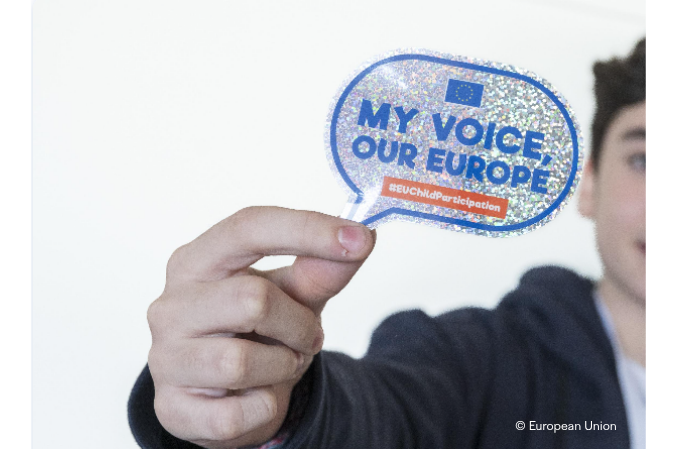
Become a member of the EU Children’s Participation Plattform and strengthen the participation of children!

The EU Platform for Child Participation, launched by the Commission in 2022, is open to all European children and young people under the age of 18 who are participants in a member organisation. Read on to find out how you can become a member of the Platform for Child Participation and get more involved in (digital) children's and youth issues.