• Topic

    Special Protection

    Children should be protected from all forms of exploitation prejudicial to any aspects of their welfare in relation to the digital environment.Exploitation may occur in many forms, such as economic exploitation, including child labour, sexual exploitation and abuse, the sale, trafficking and abduction of children and the recruitment of children to participate in criminal activities, including forms of cybercrime.

    By creating and sharing content, children may be economic actors in the digital environment, which may result in their exploitation.


Current news

Allocation of new gTLDs underway

One of the key topics at ICANN’s Annual General Meeting was the current round for new generic top-level domains (gTLDs). From 17 to 22 October, the multi-stakeholder community gathered in Bali (Indonesia) to discuss this issue.

An adult and two children are looking at a cell phone together.

Federal Government agrees on key points for the protection of children and young people in the media

On 11 September 2026, the expert commission on ‘Protecting Children and Young People in the Digital World’, set up by the Federal Ministry for Family Affairs, submitted its final report, containing 56 recommendations for action, to Federal Minister Karin Prien. She presented a key points paper to the Federal Cabinet on 14 October 2026. This document sets out initial measures to implement the expert commission’s recommendations for action.

In the picture, you can see a young person wearing virtual reality goggles. He is looking up.

General Comment on children’s rights and emerging technologies announced

At the closing of its 101st session, the United Nations Committee on the Rights of the Child announced that it would be working on a further General Comment. This will be the 28th General Comment and will address the relationship between emerging technologies and their impact on children’s rights.

The photo shows three children from behind. They are sitting at a laptop. Behind them is a white window.

EU KIDS Act - 'EU Keeping Internet Digital Spaces Accountable and Trustworthy'

On 17 September, the European Commission presented the proposal of the EU Kids Act. The draft seeks to protect minors from risky digital services and artificial intelligence applications. In the following article we are summarizing the regulatory approach set out in the European Commission’s proposal for an EU KIDS Act.

The photo shows a little boy holding a cell phone. He has black hair and is seen from behind.

AI governance must take children’s rights into account

On the occasion of the United Nations General Assembly, to be held from 22 to 28 September 2026 in New York (USA), more than 125 organisations and experts are reiterating their joint statement on children’s rights and artificial intelligence. They had already drawn attention to these issues at the Global Dialogue on AI Governance in July 2026 in Geneva (Switzerland), emphasising that children’s rights in relation to the digital environment must also be applied in the context of artificial intelligence as set out by the United Nations Committee on the Rights of the Child in 2021 in its General Comment No. 25 on the Convention on the Rights of the Child.

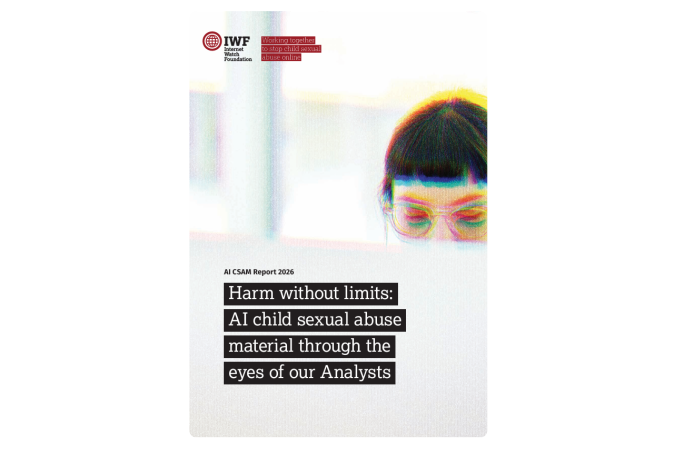
Internet Watch Foundation Report: AI-Generated Material Depicting Sexual Violence Against Children

The Internet Watch Foundation (IWF) has published a report on AI-generated material depicting sexual violence against children.

In the picture, you can see seven teenagers. They are looking down. They are holding a cell phone. They are looking at their cell phones.

Survey for the EU Youth Dialogue

The 2026 consultation phase for the EU Youth Dialogue has begun. The 12th Youth Dialogue, which facilitates the participation of young people in the European Union, focuses on European Youth Goal No. 4: Information and Constructive Dialogue. To this end, the perspectives of young people who can share their experiences in the digital world are sought. Topics include social media and artificial intelligence.

[Translate to Englisch:]

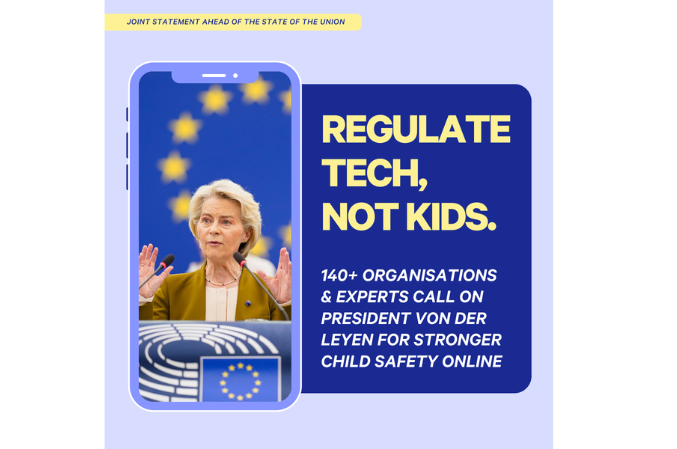
Open letter calls for stricter regulation of platforms

With regard to Commission President Ursula von der Leyen’s State of the European Union address, 144 organisations and supporters have published an open letter. In the letter, they call on the European Commission to hold digital service providers more accountable and to ensure that platforms are designed to be safe for children by default.

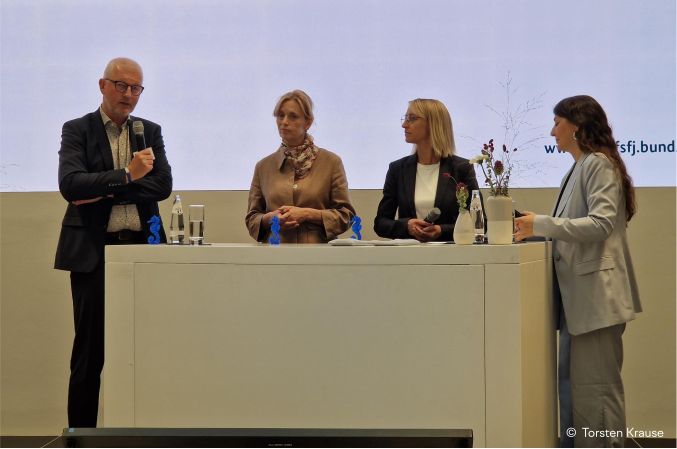
[Translate to Englisch:] (c) Torsten Krause

Minister Prien announces action plan on recommendations

Following a year of intensive work, the work of the expert commission on ‘Child and Youth Protection in the Digital World’ culminated in a closing event on Friday, 11 September 2026. At this event, the two co-chairs of the expert commission, Nadine Schön and Prof. Olaf Köller, jointly presented the final report to Federal Minister for Family Affairs Karin Prien.

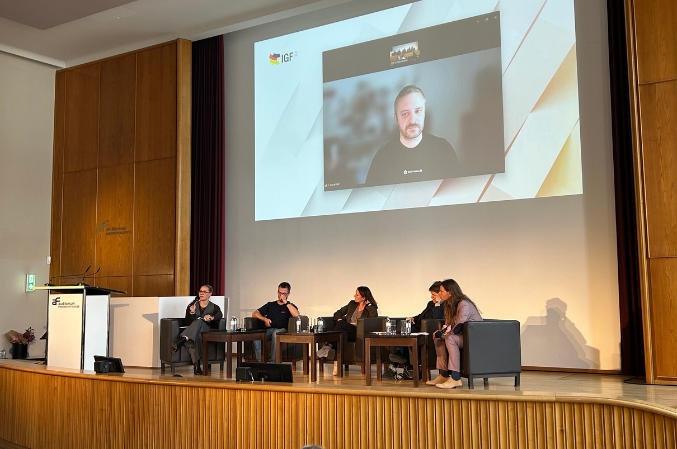
Age Assurance Can Only Be Part of the Solution

For some time now, there has been discussion about using corresponding online age-assurance mechanisms to protect young people, including those significantly below the age of majority, from certain risks. How this could be achieved, and whether age assurance can provide a solution for child and youth protection on the internet, were discussed on 9 September at the Internet Governance Forum Germany (IGF-D) in the panel discussion “Tell Me Your Age First… Online Age Assurance Between the Protection and Participation Needs of All.”